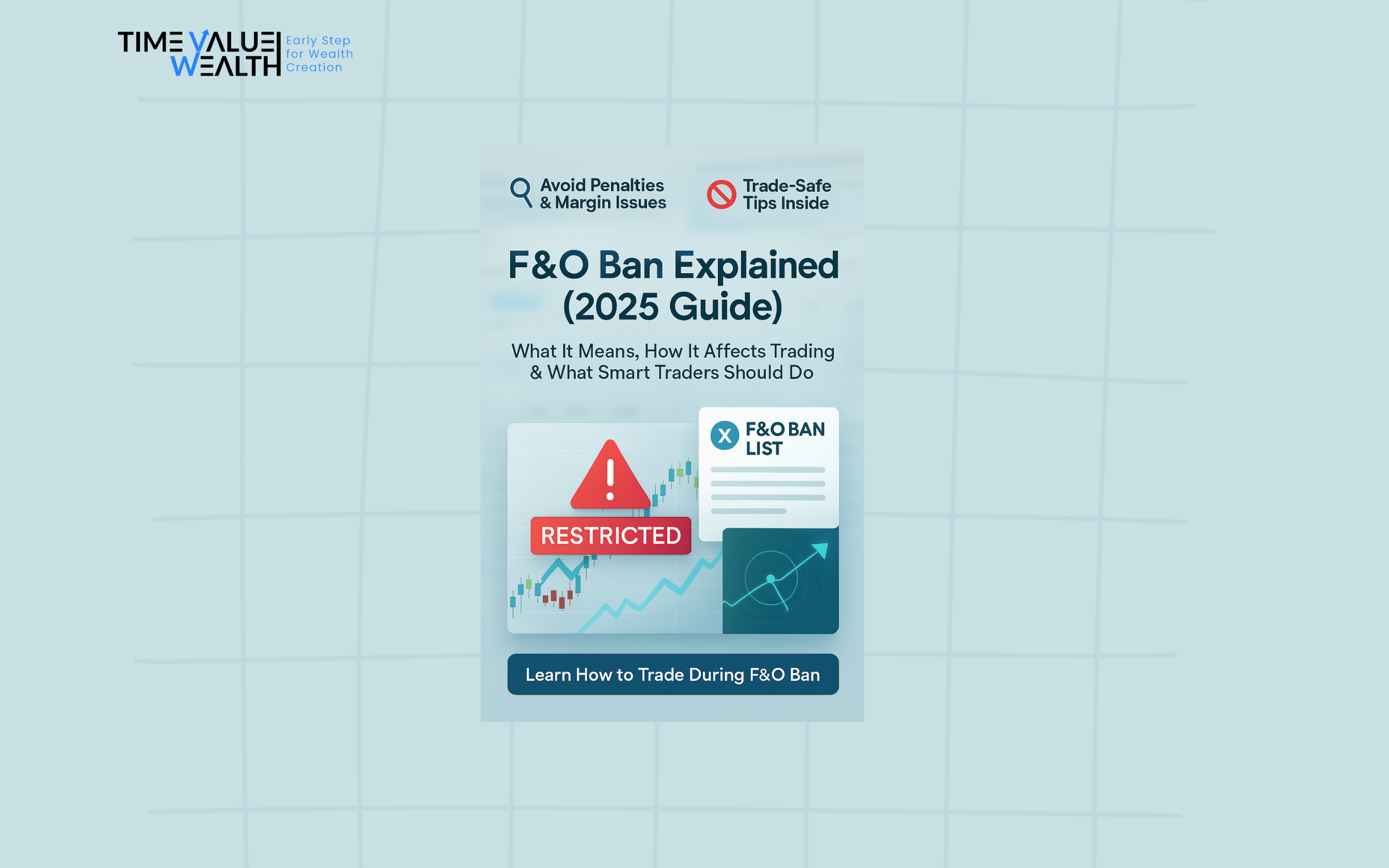
If you’ve ever seen a stock move into the F&O ban list and thought, “Why is it still being traded?”, you’re not alone. Here’s a simple breakdown of what an F&O ban really means and how you can respond as a trader.
What Is an F&O Ban?
An F&O ban is triggered when the Open Interest (OI) in a stock’s futures and options exceeds 95% of the Market-Wide Position Limit (MWPL). This is a safeguard mechanism by the exchange to prevent excessive speculation.
- 🔹No fresh positions are allowed in F&O contracts.
- 🔹Only squaring off (closing existing positions) is permitted.
The ban continues until the OI drops below 80% of MWPL.
Who’s Buying and Selling Then?
Even though fresh positions are restricted, traders with existing contracts can still exit. That’s why you’ll still see volume — but it’s from people closing out their trades, not entering new ones.
Example:
- 🔹Trader A holds a long call option.
- 🔹Trader B holds a short call option.
- If Trader A sells to exit and Trader B buys to close, a trade is recorded — but it’s not a new position.
What Should You Do During an F&O Ban?
- 🔹Track Open Interest (OI): Stay updated as the ban will only lift once OI drops below 80%.
- 🔹Exit or Adjust: If you’re already in a trade, assess whether it’s time to book profits or cut losses.
- 🔹Avoid New Entries: Brokers will block fresh trades in banned stocks — focus on planning instead.
- 🔹Analyze the Situation: Check if the stock is moving due to earnings, news, or speculation. This can help with post-ban strategies.
Key Takeaways
- 🔹Squaring off existing F&O trades is allowed during a ban — but fresh trades are not.
- 🔹Any ongoing activity is from position exits, not new trades.
- 🔹An F&O ban helps regulate excessive speculation and cool down volatility.
- 🔹Once lifted, stocks often witness sharp directional moves — stay prepared.
F&O bans are not full stops — they’re strategic pauses. Use this time to manage risk, reassess your positions, and prepare for the next opportunity. Whether you’re in or out, patience and planning make all the difference.
For more detailed information on F&O bans, visit Stocks in Ban List .