Full Breakdown of Kotak’s Report, Accounting Issues & Management Response
Kaynes Technology India Limited operates across ESDM, IoT, aerospace, defence, semiconductors, mechatronics, and space technology through multiple strategic subsidiaries.
Key Subsidiaries
- ➖ Kaynes International Design & Manufacturing Pvt Ltd – 100% owned.
- ➖ Kemsys Technologies Pvt Ltd – IoT & embedded systems.
- ➖ Kaynes Technology Europe GmbH – 60% owned (Switzerland).
- ➖ Kaynes Semicon Pvt Ltd – OSAT semiconductor division.
- ➖ Kaynes Holding Pte Ltd – Singapore-based global acquisitions arm.
- ➖ Iskraemeco India Pvt Ltd – Smart metering tech.
- ➖ Digicom Electronics Inc – US-based operations.
- ➖ Kaynes Electronics Manufacturing Pvt Ltd – Hyderabad plant.
- ➖ Kaynes Circuits India Pvt Ltd – PCB manufacturing.
- ➖ Kaynes Mechatronics Pvt Ltd – Mechatronics systems.
- ➖ Kaynes Space Technology Pvt Ltd (KSTPL) – Satellites & launch vehicles.
Recent Strategic Acquisitions
- ➖ Iskraemeco India (2024)
- ➖ Sensonic GmbH – stake increased to 61% in 2025.
- ➖ August Electronics – Canada expansion.
- ➖ Aerocaliph Components & Cryo Precision – Aerospace/defence.
- ➖ Tranzmeo IT Solutions – Fiber sensing deep-tech.
- ➖ Digicom Electronics – US manufacturing presence.
Analyst vs Management: Detailed Clarifications
This article explains all major concerns raised by analysts and management’s responses in very simple language, without technical jargon.
1️⃣ “Magical” Profit at Iskraemeco
The so-called “magical” profit at Iskraemeco was not magic at all — it resulted from large one-time clean-ups in H1 and a normal 9% margin in H2, but analysts mistakenly calculated a 28% margin and misinterpreted acquisition-related adjustments.
2️⃣ Cash Conversion Cycle (CCC) Confusion
The sharp jump in CCC wasn’t real — analysts used the wrong formula, and the correct ICAI method shows the cash cycle actually improved, not deteriorated.
3️⃣ Weak Operating Cash Flow
Cash flow stress is real but temporary. The company is investing heavily for future growth. Once new plants and projects stabilize, cash generation should improve.
4️⃣ High R&D Capitalisation
This concern comes from mixing acquisition accounting with normal R&D. The accounting treatment follows rules and does not artificially inflate profits.
5️⃣ Goodwill Not Increasing After Acquisitions
Conservative accounting, not suspicious. Lower goodwill actually reduces future risk.
6️⃣ Missing Related-Party Transactions
Process lapse, not financial manipulation. Governance issue was minor and corrected.
7️⃣ Rising Contingent Liabilities
8️⃣ The 17.7% Interest Rate Shock
❌ No evidence of fraud
❌ No earnings manipulation
❌ No hidden debt issue
Main reasons for confusion:
➖ Acquisition accounting
➖ One-time clean-ups
➖ Different calculation methods
➖ Disclosure lapses in notes
➖ Heavy growth-phase distortions
Questions for Kotak Institutional Equities
These questions are raised in the spirit of transparency and investor understanding.
They reflect curiosity around timing, methodology, and communication — not allegations.
The FY25 annual report has been publicly available since May 2025. What prompted the decision to highlight these concerns only in December 2025, nearly six months later?
The promoter lock-in period ended on 18 November 2025, and the report was released shortly thereafter. Was this timing purely coincidental, or were there specific developments that led to the report’s release at this point?
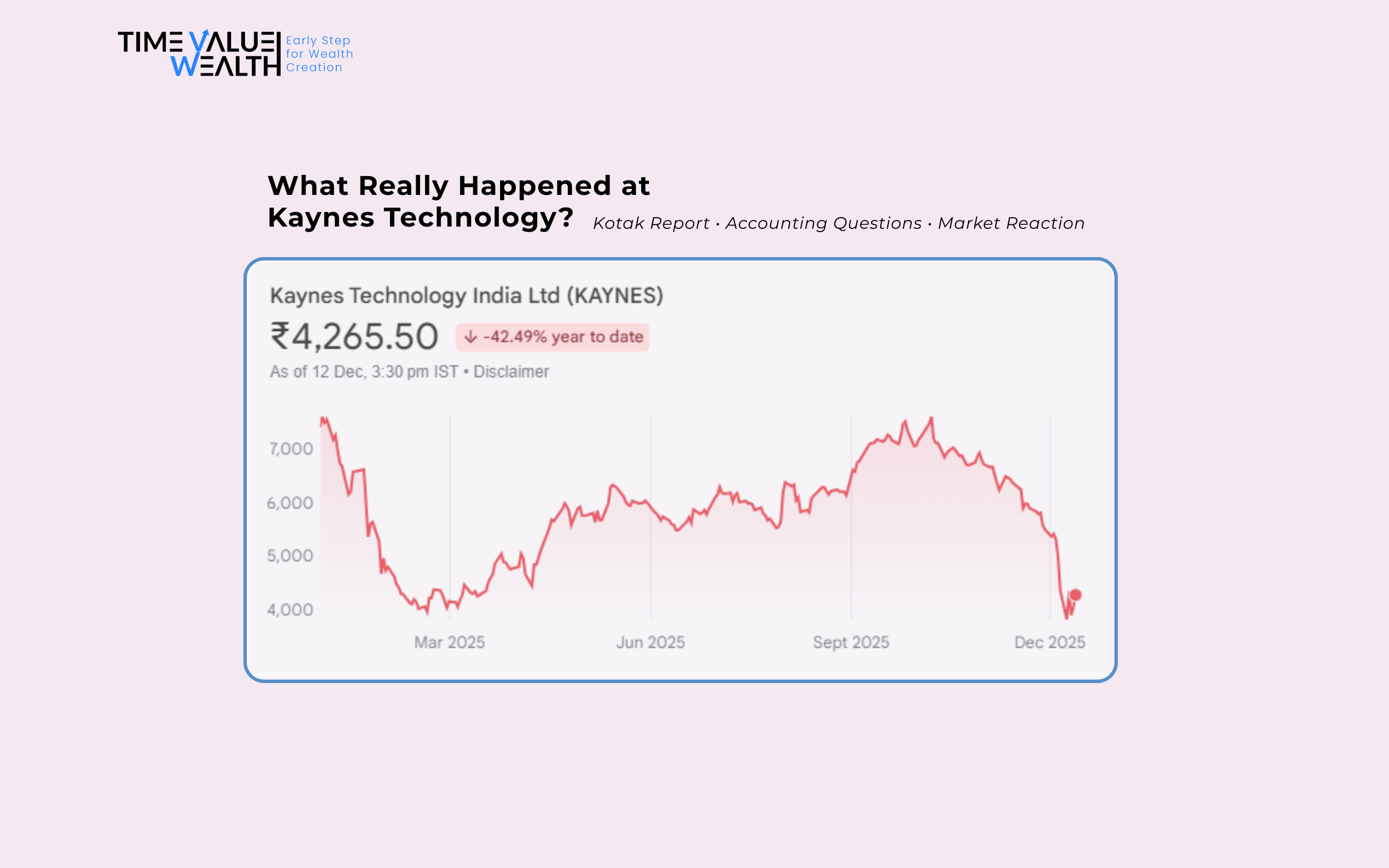
The share price showed noticeable weakness before the report’s public release. Had concerns already begun circulating informally within the market?
Did Kotak Institutional Equities seek clarifications or responses from the company’s management prior to releasing the report?
4 December: Key concerns were published
9 December: Target price was revised
Why were both actions not taken simultaneously, given that they relate to the same set of observations?
An investor meet was held on 25 November 2025, shortly before the report. Why were these issues not directly discussed with management during that interaction?
Much of the data referenced in the report had been available in public disclosures since May 2025. What led to the decision to focus on these points at a later stage?
The report appears to contain several factual or interpretational differences, including:
- Cash Conversion Cycle calculated using a different method
- Margin computations differing from company disclosures
- Interpretation of intangible assets without full acquisition context
- Limited consideration of management’s disclosed accounting approach
- It also appears that an internal calculation methodology was applied instead of relying on the company’s published framework.
Market Question:
How were these methodological differences reviewed internally, and what quality checks were in place
before the report was released?
Retail investors suffered the most from this episode. The key concerns raised in the report were not new disclosures — the data had already been publicly available in the market for several months.
This raises an important question: If the information was already in the public domain, why were these issues not highlighted earlier? Why did they gain prominence only after the lock-in period ended, and not when the data first became available?
While companies are expected to follow ethical disclosure practices, it is equally important to ask whether analysts and brokerages applied the same level of diligence and verification before publishing a report that had a significant market impact.
The episode highlights a critical gap — timing and communication, rather than discovery of new information, played a major role. Unfortunately, the consequence of this gap was borne largely by retail investors, who faced sudden volatility and losses.