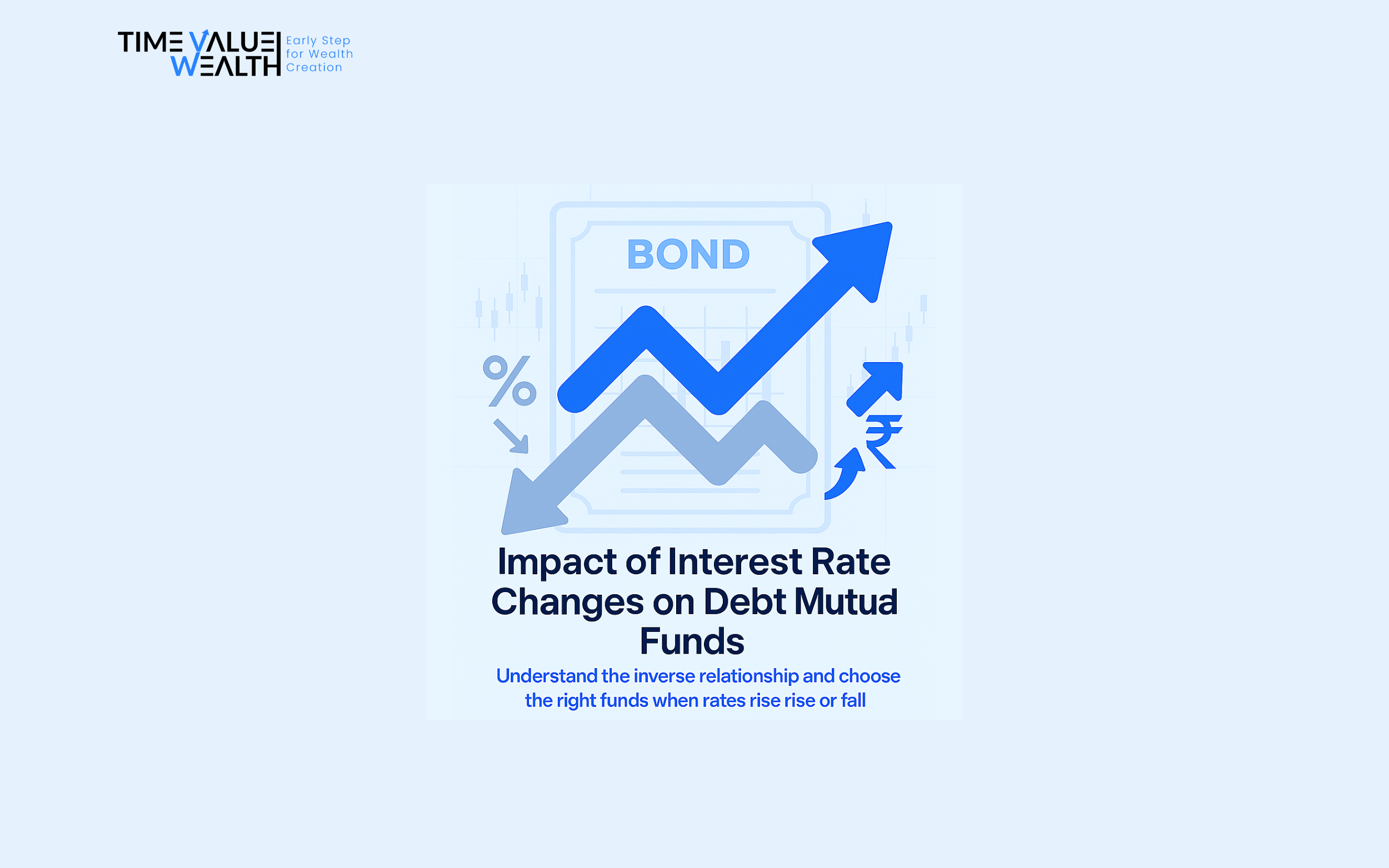
Impact of Interest Rate Changes on Debt Mutual Funds
Understanding how interest rate movements affect debt mutual funds can help you make smarter investment choices. Here’s a clear guide.
The Inverse Relationship
Debt fund returns are tied to bond prices, which move inversely to interest rates:
- When rates rise → Bond prices fall → NAV drops
- When rates fall → Bond prices rise → NAV increases
Why? New bonds offering higher interest make older, low‑coupon bonds less attractive, reducing their price — and vice versa.
Impact By Fund Type
| Fund Category | Interest Rate Sensitivity | Impact When Rates Rise | Impact When Rates Fall |
|---|---|---|---|
| Banking & PSU Debt | Low | Minor NAV fall | Minor NAV gain |
| Corporate Bond Funds | Low–Moderate | Slight pressure | Moderate gain |
| Dynamic Bond Funds | High | May reduce duration | Higher gains |
| Credit Risk Funds | Moderate | Less impact from rates | Gains if ratings improve |
| Floater Funds | Low | Coupons rise = benefit | May underperform fixed bonds |
| 10-Year Gilt Funds | Very High | Significant NAV loss | Significant NAV gain |
| Gilt Funds | High | NAV decline | NAV appreciation |
| Medium Duration | Moderate | Some NAV drop | Healthy NAV boost |
Example Scenario
Imagine the RBI hikes the repo rate by 1%:
- A 10‑year G‑Sec could drop 5–7% in price.
- A Floater Fund might benefit as coupons reset higher.
- A Dynamic Bond Fund may cut maturity to limit loss.
Investor Insights
When rates are expected to rise:
✅ Prefer short-duration funds like Banking & PSU Debt or Floater Funds.
When rates are expected to fall:
✅ Go for long-duration funds like Gilt Funds or Dynamic Bond Funds.
Bottom Line: By matching your fund choices with interest rate trends, you can manage risk and maximize returns with confidence.